
The air cooler cools by water evaporation, without refrigerant gas or a closed circuit. This fundamental difference from the portable air conditioner determines its performance, limitations, and selection criteria. For a suitable purchase for your home this summer, three technical parameters deserve comparison before price: air flow, tank capacity, and the ambient humidity level of your room.
Air Cooler, Fan, and Portable Air Conditioner: Comparison Table
Before detailing the selection criteria specific to the air cooler, a quick comparison allows us to position this device against the two most common alternatives.
See also : How to Choose the Right School for a Successful Career in Interior Design?
| Criterion | Fan | Air Cooler | Portable Air Conditioner |
|---|---|---|---|
| Principle | Circulates ambient air | Water evaporation | Refrigerant gas (closed circuit) |
| Temperature drop | None (feels cool) | Several degrees (varies with humidity) | Precise control of target temperature |
| Impact on humidity | None | Increases indoor humidity | Dehumidifies the air |
| Electric consumption | Low | Low to moderate | High |
| Refrigerant gas | No | No | Yes |
| Necessary work | No | No | Exhaust duct to the outside |
The air cooler is positioned between the fan and the air conditioner, both in terms of price and cooling capacity. The technical sheets available on rafraichisseurdair.com make it easy to compare air flows and tank capacities between models.
The difference in electric consumption between the air cooler and the portable air conditioner remains the primary argument in favor of the former. However, the portable air conditioner controls the temperature to the exact degree, which the air cooler does not.
You may also like : How to Choose the Minimum Size for Your Bedroom?
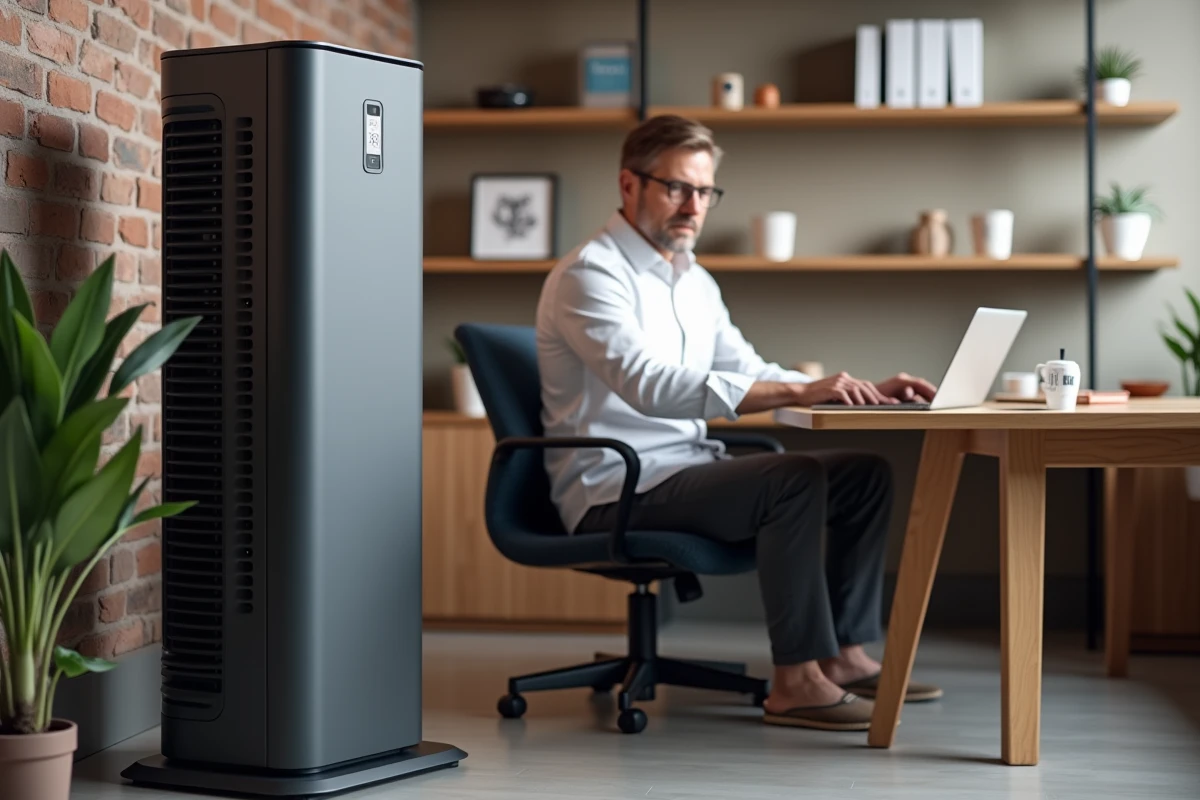
Humidity and Air Flow: The Two Factors That Change Everything
Most guides focus on tank size or the number of speeds. These criteria matter, but they overlook the determining factor: the relative humidity of your room before starting the device.
The Trap of Indoor Humidity
An air cooler works by evaporation. The drier the air, the more effective the evaporation, and the lower the temperature. In a room where the humidity already exceeds 60%, the device saturates the air with moisture without noticeably lowering the temperature.
The Anses recommends maintaining indoor humidity between 40 and 60%. Beyond that, the risk of mold and dust mites increases. An air cooler used continuously in a poorly ventilated room can therefore degrade indoor air quality.
Specifically, a home in the south of France with dry air in summer will benefit much more from an air cooler than an apartment in a humid coastal area. This parameter should guide the choice even before looking at the device’s specifications.
Air Flow and Room Size
The air flow, expressed in cubic meters per hour, determines the device’s ability to cover a given volume. A flow rate that is too low for the room concentrates the cooling effect within a limited radius around the device.
- For a small bedroom or office, a moderate flow is sufficient, and a compact mini cooler may be suitable.
- For an open living area, a higher flow and a large capacity tank are needed to avoid having to refill it every two hours.
- For semi-professional use (workshop, commercial space), industrial models offer much higher flows, but their bulk and noise level make them unsuitable for residential use.
A large capacity tank extends autonomy, but also adds to the total weight of the device. If you need to move the cooler from room to room, check for wheels and the weight when full.
Filter, Maintenance, and Lifespan of the Air Cooler
Maintenance is the blind spot of most comparisons. A poorly maintained air cooler becomes a breeding ground for bacteria and unpleasant odors within weeks.
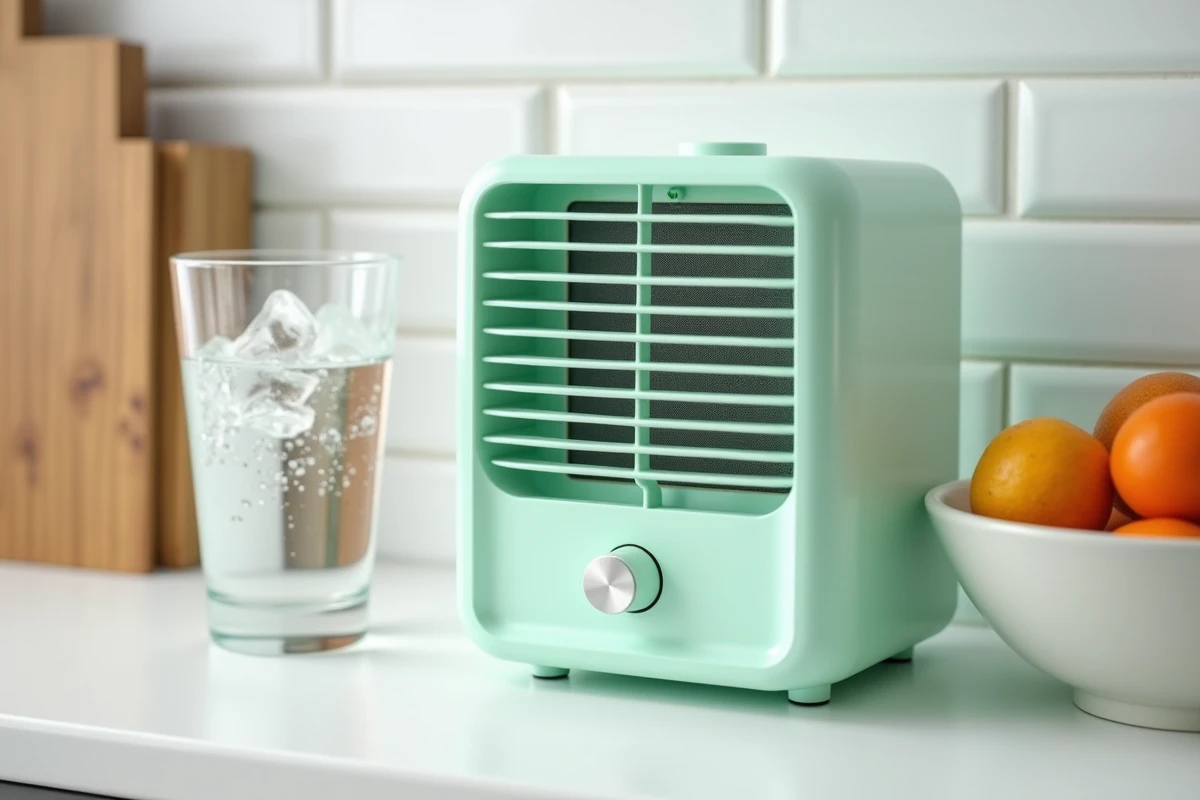
The evaporation pad (or wet filter) must be rinsed regularly and replaced according to the manufacturer’s recommendations. A clogged filter reduces air flow and cooling efficiency. The replacement cost varies by brand, and some models use proprietary pads that are difficult to find off-season.
The tank itself requires frequent cleaning to prevent the growth of microorganisms in stagnant water. Some models incorporate an antibacterial system or an ionizer, but their actual long-term effectiveness remains to be verified on a case-by-case basis.
Useful Features and Superfluous Options
Some functions deserve attention:
- The timer allows the device to turn off at night without intervention, which limits both consumption and humidity rise.
- The oscillation mode widens the diffusion area in the room.
- The remote control avoids having to get up, which may seem trivial but enhances nighttime comfort.
Conversely, the “natural breeze” or “sleep” modes offered by some brands often only modulate the fan speed according to a pre-programmed cycle. Their added value remains marginal compared to manual adjustment.
Energy Labeling and Regulatory Evolution for Cooling Devices
Domestic air coolers are not yet all covered by a harmonized energy label at the European level. The European Commission is working to extend eco-design and labeling requirements to localized cooling devices, including some comfort adiabatic systems.
Several brands anticipate this framework and already communicate seasonal energy efficiency (SEER) and carbon footprint in their technical documentation. Comparing the SEER between two models provides a reliable indicator of actual operating costs.
This regulatory evolution should ultimately facilitate comparisons between devices. In the meantime, watt consumption remains the simplest benchmark for evaluating electrical costs over an entire season.
The choice of an air cooler is less about the purchase price than about the suitability between the humidity level of your home and the very principle of the device. In a dry region, with a well-ventilated room and regular filter maintenance, the air cooler offers an effective compromise between thermal comfort and energy efficiency. In an already humid environment, the portable air conditioner remains the only option capable of reliably lowering the temperature.