
The family meal that no one really listens to, the board game abandoned after ten minutes, the “together” weekend where everyone stays on their screen: these situations resonate with most parents. Strengthening family bonds on a daily basis does not rely on spectacular activities. The quality of the bond primarily depends on what happens in ordinary moments, where mental fatigue and overloaded schedules complicate everything.
Emotional availability of parents: the true foundation of family connection
Have you ever noticed that on some evenings, even twenty minutes with your children is enough to create a connection, while at other times, two hours together produce nothing? The difference rarely lies in the chosen activity. It depends on your internal state at the moment you are present.
The quality of the bond primarily depends on the emotional availability of the adult, not the time spent together. An exhausted parent who is “present” while thinking about their to-do list does not convey much. A parent who truly engages during a car ride, even for ten minutes, opens up a space where conversation flows.
Practically, this means accepting that you won’t always be available, rather than pretending to be hollowly present. Saying “I’m tired tonight, let’s meet for breakfast together tomorrow morning” is more honest and productive than a dinner where everyone is irritated. Several resources dedicated to family life detail these mechanisms, such as Mister Papa’s family page which approaches parenting from this angle of real daily life.
Family micro-rituals: consistency matters more than duration

The idea of “quality time” puts unnecessary pressure. We imagine that we need to organize an outing, carve out a long slot, prepare something. In practice, short and repeated rituals strengthen bonds much more than one-off events.
An effective family ritual has three characteristics:
- It is predictable: everyone knows when it takes place, without negotiation (Tuesday’s drive, Wednesday’s snack, five minutes before bed)
- It is short: between five and twenty minutes is sufficient, making it compatible with any schedule
- It is protected: during this time, no phone, no external interruptions, even brief ones
The bedtime ritual is a good example. Telling a story, asking a question about the day, or simply sitting together for a few minutes creates a stable reference point. The child knows that this moment belongs to them. It is this regularity that builds emotional security, not the duration.
Chosen ritual or imposed routine
A common trap is turning a good ritual into a chore. The daily family meal, often recommended, can become counterproductive if it is experienced as a rigid obligation. A ritual works as long as it remains voluntary for each member.
A teenager who refuses to have dinner at the table some evenings is not necessarily expressing rejection. They are testing their autonomy. Allowing them the choice two or three times a week, while maintaining another ritual (a drive, a weekend moment), preserves the bond without creating conflict.
Removing the phone: the concrete condition for real listening
Most advice on screens remains vague: “limit screen time,” “be present.” What really makes a difference is a simple physical gesture: removing the phone from the room during shared moments.
Not putting it on silent. Not turning it face down. Placing it in another room. The nuance matters because as long as the device remains visible, part of the attention is still captured by it. Both parents and children perceive this.
Why this radical choice? Because the mere presence of a smartphone on the table reduces the perceived quality of the conversation, even without notifications. It’s not a matter of will: it’s mechanical. The brain remains alert as long as a potential source of stimulation is accessible.
Applying the rule without making it a sermon
There’s no need to turn this into a speech about the evils of digital devices. The simplest method: a basket or drawer at the entrance, where everyone (parents included) places their phone during dinner or the chosen ritual. The collective gesture prevents children from perceiving the rule as a punishment aimed solely at them.
Activities side by side: why doing things together is better than “talking”
Asking an eight-year-old “how was your day” often results in a terse “fine.” Asking the same thing to a teenager elicits a shrug. Direct family communication, face to face, creates pressure that blocks conversation, especially among younger children or teens.
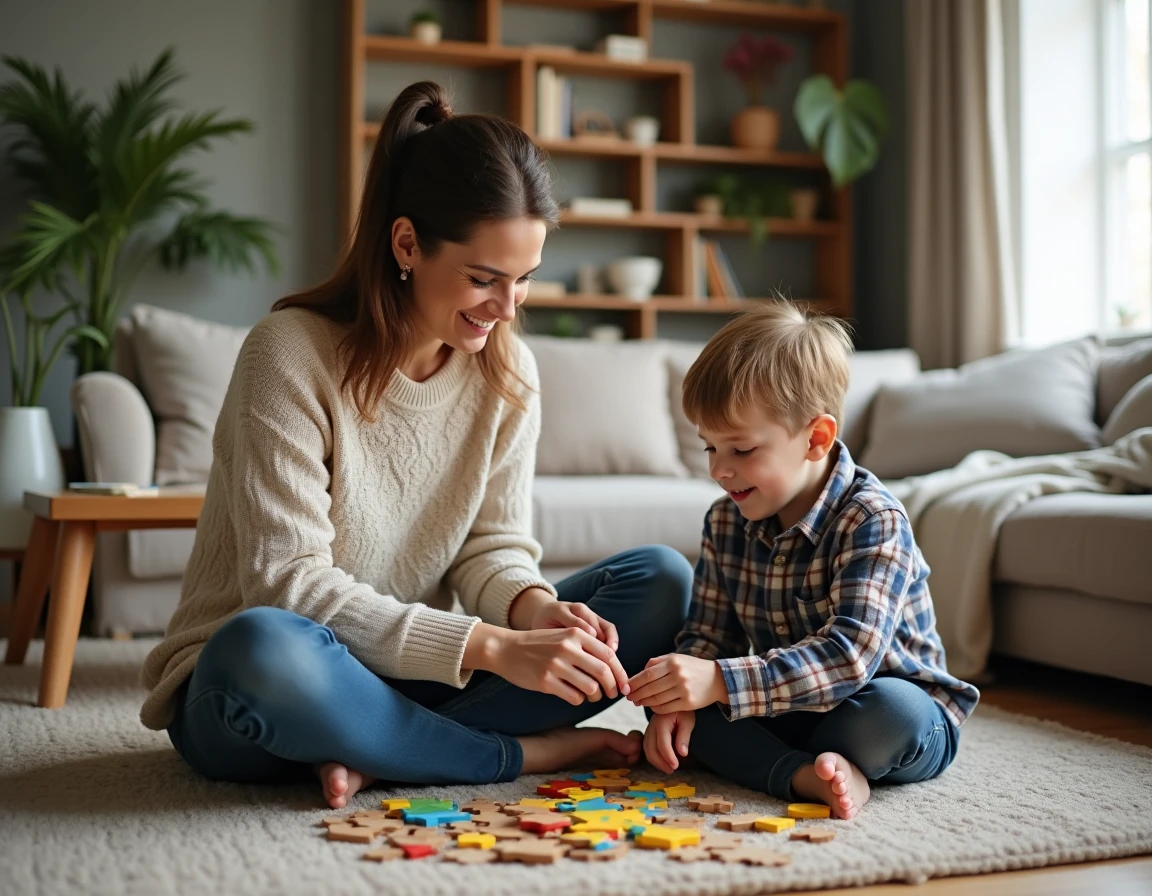
Side-by-side activities trigger conversation without forcing it. Cooking, gardening, DIY, folding laundry, walking: when attention is shared between an action and an exchange, words come more naturally. The gaze is not fixed on the other, which reduces the emotional stakes of each sentence.
- With a child under six: preparing a simple cake, sorting toys together, watering plants
- With a child between six and twelve: cooking a meal, assembling furniture, going for a bike ride
- With a teenager: a car ride without music, shared tidying up, a DIY project together
The car ride deserves special mention. The absence of direct eye contact and the constrained time create a setting where teenagers are more likely to open up. Cutting the music or radio during part of the ride opens this space without imposing anything.
The family bond is built through shared actions, not through discussions about family. A parent repairing a bike with their child conveys more connection than a parent organizing an artificial “family night.” The simplest moments, repeated consistently and with genuine attention, are the ones that endure, far beyond special occasions.