
When searching for information about Arthur Mensch, co-founder of Mistral AI, search suggestions quickly shift towards his physical height, in centimeters. Not the valuation of his startup nor the size of his artificial intelligence models. This shift in curiosity speaks volumes about how the image of tech leaders is consumed in France.
Arthur Mensch: What the buzz about his height reveals from Google searches
In the realm of queries, a classic pattern emerges. A leader gains media visibility, and associated searches fragment: background, wealth, private life, appearance. For Arthur Mensch, this shift has accelerated since several media outlets attributed him the status of the first French billionaire in artificial intelligence.
Questions about Mensch’s appearance have significantly increased in recent months, particularly during in-person interviews. This phenomenon is not unique to Mistral AI: the same reflex is observed for other tech figures as soon as they cross a threshold of public notoriety.
For those wanting to delve deeper into the subject, one can check what is Arthur Mensch’s height on Yoolight, which compiles available data and contextualizes this viral curiosity.
Mistral AI and Arthur Mensch’s notoriety: how one fuels the other
Mistral AI is not a discreet startup. Positioned against OpenAI, Anthropic, and Google with its models like Mistral Large or the open-source versions, the company attracts attention well beyond the tech circle. Arthur Mensch, born in 1992 in Sèvres, having passed through ENS and DeepMind, embodies this trajectory in the French media.
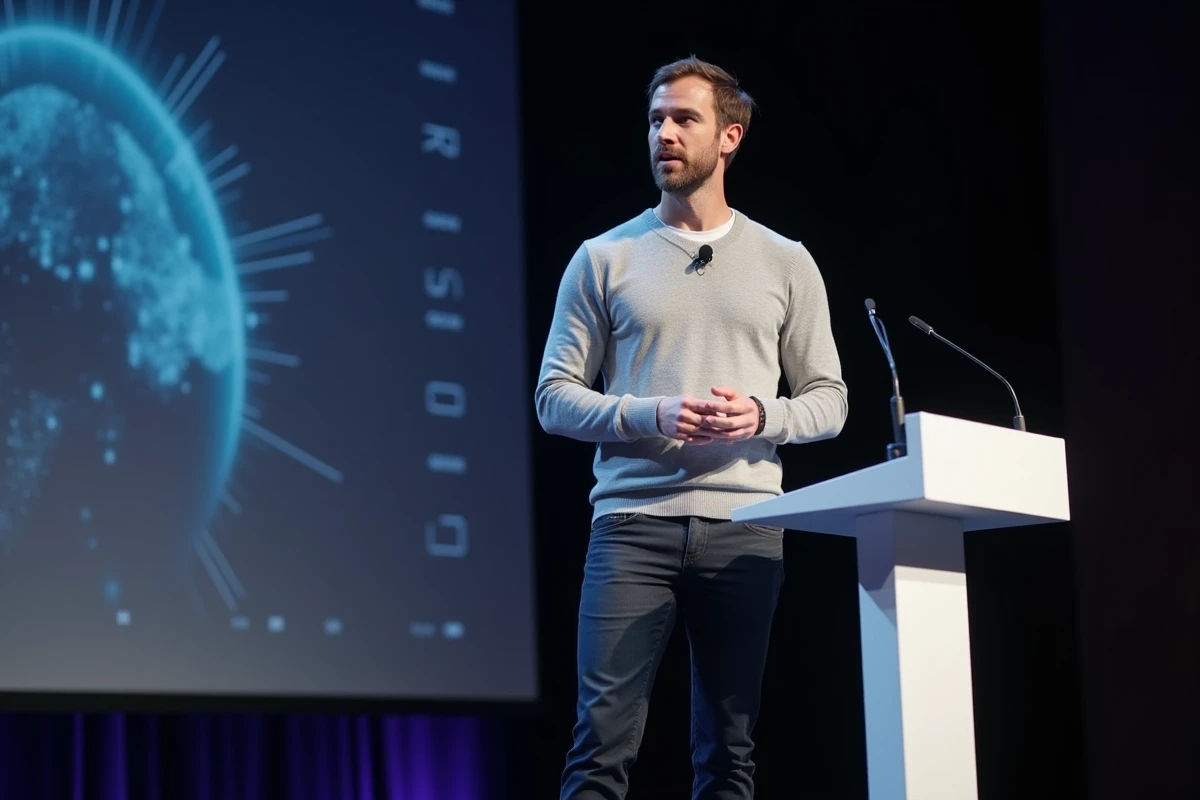
Time placed him on its list of promising innovators. In France, his public stances on digital sovereignty and AI funding have given him a political stature that few startup leaders achieve. The more the media figure grows, the more curiosity about their physique follows.
This mechanism is seen with profiles like Elon Musk or Sam Altman in the United States. The difference in France lies in a documented cultural bias: the height of a leader is often interpreted as a signal of authority. Feedback on this point varies according to sociological studies, but the volume of Google searches leaves no doubt about the public’s appetite.
Hearing at the National Assembly: when substance eclipses form
On May 12, 2026, Arthur Mensch was heard at the National Assembly as part of a commission on digital dependencies. Two deputies were present. This detail, widely reported, made more noise than the content of his intervention itself.
During this hearing, Mensch made some heavy operational observations:
- France lacks long-term capital to finance artificial intelligence players capable of competing with American and Chinese investments, which amount to tens of billions of dollars.
- Europe risks a form of technological vassalage if it remains dependent on cloud infrastructures, models, and hardware produced across the Atlantic or in Asia.
- The development of AI requires massive energy planning (electric mix, infrastructures, permit timelines), an angle almost absent from public debates centered on him.
This gap between the content of his interventions and the Google searches focusing on his physique illustrates a concrete problem. People talk more about Arthur Mensch’s height than about his warnings on digital sovereignty.
Searches on the physical appearance of tech leaders: a measurable phenomenon
The curiosity surrounding the physical appearance of tech bosses is not anecdotal. It follows reproducible patterns that can be observed using query analysis tools.
Several elements fuel this type of buzz:
- Television appearances and official photos create a first visual contact that triggers complementary searches.
- Social media amplifies physical comparisons between leaders, often in the form of memes or comments.
- The lack of clear answers on public profiles (Wikipedia does not mention Arthur Mensch’s height) sustains the search: the less accessible the information, the more it is sought after.
This last point works like an inverted Streisand effect. No one is actively hiding the information, but its absence in usual sources is enough to fuel curiosity.

Arthur Mensch between AI and public image: what Google Trends doesn’t say
When looking at search trends, “Arthur Mensch height” coexists with “Mistral AI valuation,” “Arthur Mensch fortune,” and “Mistral AI vs OpenAI.” These queries paint a picture of an audience oscillating between fascination for entrepreneurial success and trivial curiosity.
Arthur Mensch carries an offensive discourse on Europe’s ability to compete in AI. He denounces what he calls a “war of narratives” that would condemn the continent to remain on the sidelines. This positioning, echoed by Le Figaro in June 2026, contrasts with the lightness of searches about his physical stature.
The buzz around his height functions as an indicator of public notoriety, not as a hindrance to his credibility. The most searched tech leaders based on physical criteria are also those whose companies weigh the most. Correlation does not prove anything, but it shows that popular curiosity does not distinguish between the serious and the trivial.
The volume of searches for “Arthur Mensch height” will likely continue to grow as long as Mistral AI remains in the spotlight. This public visibility exposes both the strategic choices of the founder and the most trivial details of his image.