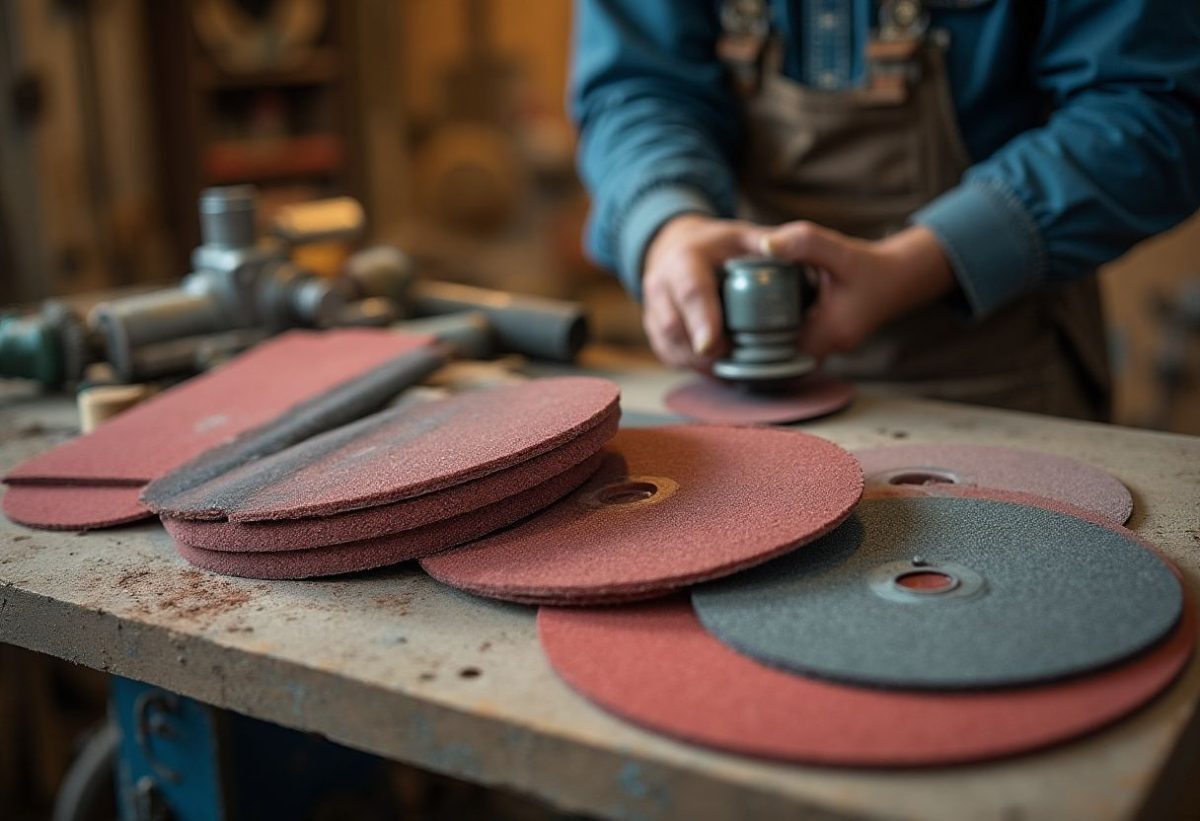
Abrasive materials play a crucial role in many industrial and domestic fields. Their ability to wear, polish, or clean various surfaces makes them indispensable in our daily activities, ranging from household chores to the automotive sector, as well as in metallurgy and jewelry making. Whether sculpting marble masterpieces or giving your car a flawless shine, abrasives are at the heart of many technological innovations. Their use is so ubiquitous that we often forget their complexity and the diversity of forms they can take.
Types of Abrasives and Their Characteristics
Abrasives come in a wide range, each possessing unique characteristics that make them suitable for specific uses. Understanding these differences is essential for choosing the right material based on the intended application.
Natural abrasives like quartz and diamond are often prized for their exceptional hardness. Diamond, for example, is used in jewelry for its fine cutting properties. Synthetic materials, such as silicon carbide and alumina, offer economical solutions with high performance. The latter are often employed in industrial applications for their ability to wear less quickly than their natural counterparts.
Applications also vary according to granularity, meaning the size of the abrasive grains. A fine abrasive is ideal for smooth finishes, while a coarser grain is suitable for roughing work. Indeed, granularity directly influences the effectiveness of the abrasion process.
Industrial and Domestic Applications of Abrasives
In both industrial and domestic settings, abrasives are ubiquitous and demonstrate their versatility. Their use varies widely according to the specific needs of the tasks to be accomplished.
- Automotive Industry: abrasives are essential for polishing car bodies and preparing surfaces before painting.
- Construction and Building: they are used for sanding wooden and metal surfaces, ensuring a flawless finish before the application of coatings.
- Domestic Applications: from scrubbing pots to renovating furniture, abrasives make a multitude of household tasks possible.
- Metallurgical Industry: in metalworking, they are used for deburring, polishing, and refining parts for precise tolerances.
Environmental Impact and Innovations
Due to the growing awareness of environmental issues, the abrasive industry is not exempt from the need to reduce its ecological footprint. Recent innovations aim to address these concerns effectively.
Eco-friendly materials are gaining popularity. They are made from renewable or recycled components while maintaining competitive performance. Emphasis is placed on waste reduction and optimizing manufacturing processes to minimize environmental impact.
Furthermore, technological advancements in the production of new types of abrasives, such as ceramic-based abrasives, offer increased durability and energy efficiency. These innovations result in significant reductions in production costs and energy savings.
In the face of the constantly evolving industrial and domestic needs, abrasives continue to prove their importance in our modern society. Their ability to adapt to various environments, combined with ongoing research for more sustainable solutions, positions these materials as essential elements in many sectors.