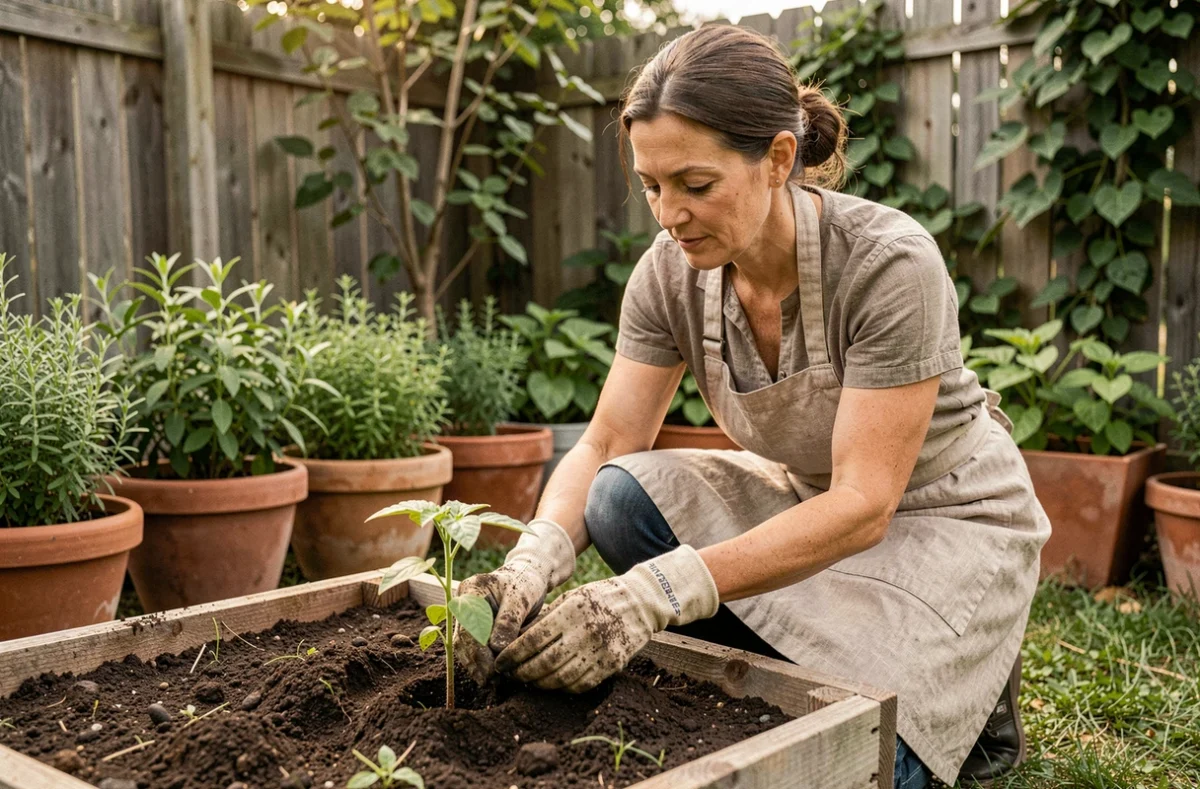
A productive vegetable garden is built not on good intentions, but on healthy soil and growing choices that suit the conditions on your plot. Creating a natural vegetable garden means understanding a few biological processes before you even sow a seed.
Living soil and natural fertility: what determines a productive vegetable garden
A vegetable garden’s productivity depends first and foremost on the biological activity of the soil, not on external inputs. Soil teeming with earthworms, mycorrhizal fungi and decomposer bacteria provides plants with a level of fertility that even organic fertilizers can only partially replace.
Before planting anything, assess the soil structure. Compact clay soil needs to be handled differently from sandy loam. The test of rolling a clump of soil between your fingers remains the most reliable method for gardeners: if the soil forms a sausage that does not crack, it has a high clay content and drainage will need to be improved by adding coarse organic matter.
Limiting mechanical soil disturbance protects the soil life and structure already in place. A field report published by Actu.fr describes a farm in Normandy that combines permanent soil cover, reduced mechanical tillage and green manures, with notable results in water retention. The same article points to one drawback: thick mulch can encourage certain pests, especially slugs, depending on the soil type and local climate.
The resources available on L’Esprit Nature’s vegetable garden explore these living-soil growing methods and how to adapt them in practice.
Green manures and cover crops between plantings
Leaving a bed bare after harvesting is a common technical mistake. Exposed soil deteriorates under the effects of rain, sun and wind. Green manures are not an optional extra: they are an integral part of the fertility cycle.
- Oats and rye improve soil structure at depth thanks to their dense root systems, and produce abundant biomass to dig in during spring.
- Legumes (peas, clover, vetch) fix atmospheric nitrogen through root nodules, reducing the need for nitrogen inputs for the next crop.
- An oat-vetch mix combines both functions, but it needs to be sown early enough in autumn to establish before the first frosts.
A cover crop sown too late will not do its job. We recommend sowing as soon as the bed is cleared, ideally before mid-October in an oceanic climate and earlier in continental regions.
Choosing vegetables for a natural garden: prioritize hardiness over catalog favorites
Mainstream gardening articles routinely recommend tomatoes, zucchini and lettuce as starter crops. This is problematic: tomatoes and zucchini need plenty of water and are susceptible to fungal diseases when conditions are unsuitable.
A productive natural vegetable garden relies on vegetables suited to the local soil and climate. Heirloom varieties and locally propagated landraces often tolerate stress better than F1 hybrids bred for greenhouse growing.
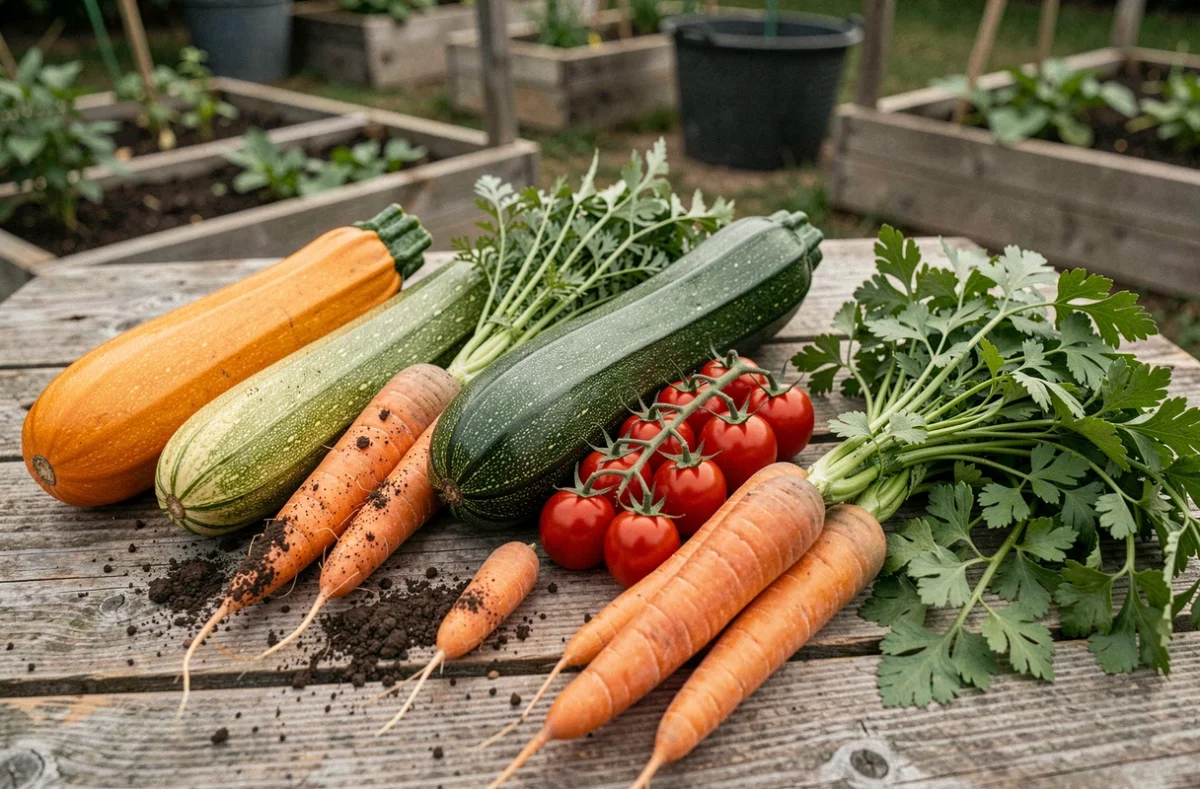
Hardy leafy vegetables grow quickly and tolerate average soils: lamb’s lettuce, spinach, Swiss chard and arugula. They cover the ground quickly and help suppress weeds. Root vegetables (carrots, parsnips, beets) need well-loosened soil but little fertilizer.
Wait until the soil is sufficiently rich and alive before adding tomatoes. First-year soil, even when well mulched, will produce disappointing results with such nutrient-hungry crops. It is better to devote the first season to less demanding vegetables and building soil fertility.
Water management in the vegetable garden: plan for local restrictions
Watering is the most underestimated task when starting a vegetable garden. Local water restrictions change every year depending on drought conditions. Before deciding how large to make your growing beds, check the current prefectural orders for your municipality to avoid planning crops that will require watering you cannot legally provide in midsummer.
Rainwater harvesting is a basic investment. A five- to ten-centimeter layer of mulch significantly reduces evaporation, but does not eliminate the need to water summer crops. Methods inspired by traditional market gardeners that aim to grow without tap water produce varying results depending on soil type and actual local rainfall.
- Mulch every bed as soon as it is planted, including row-sown crops once they have emerged, using straw, hay or fallen leaves.
- Water at the base of the plants, never with a sprinkler, to limit leaf diseases and evaporation losses.
- Group crops according to their water needs: grow cucurbits and tomatoes together, and root vegetables and alliums in a less-irrigated area.
Companion planting and encouraging wildlife in the vegetable garden
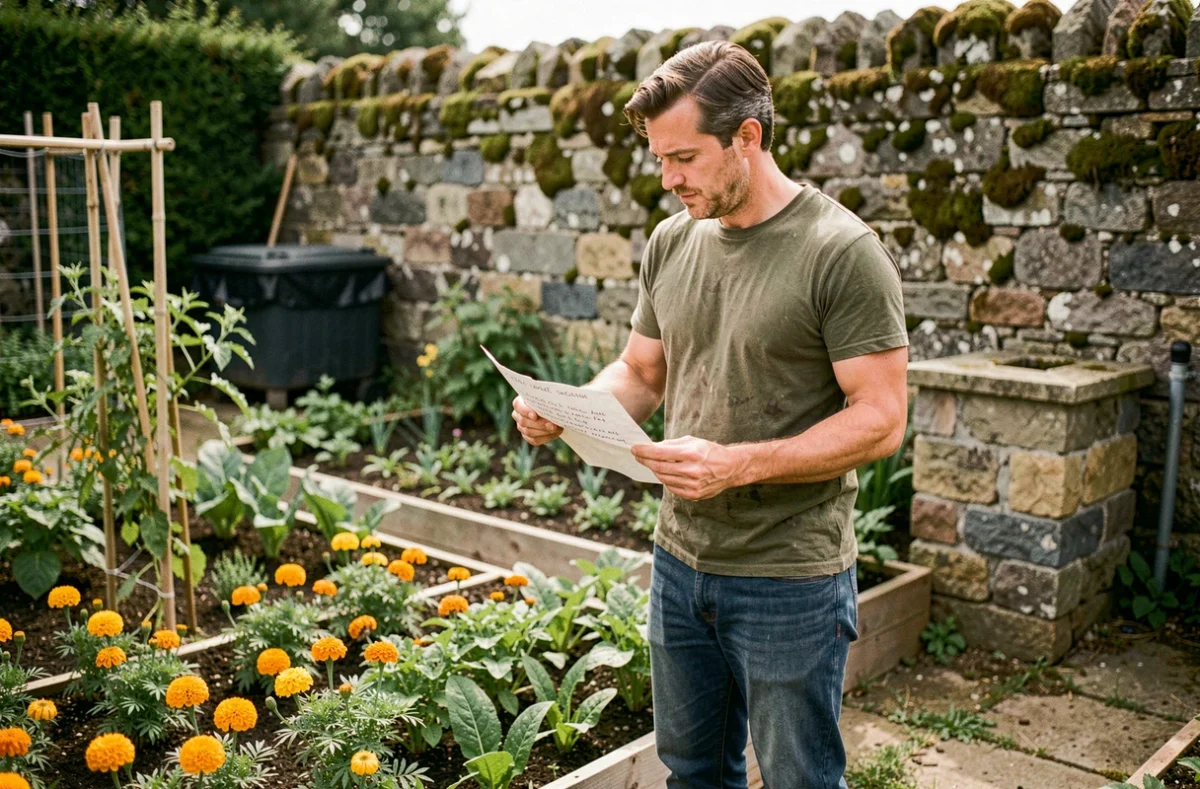
A productive natural vegetable garden does not rely on monoculture in each bed. Companion planting plays a practical role in pest management and making the most of space. Planting wildflowers along the edges of the garden attracts pollinators and beneficial insects that prey on aphids.
Flower strips and insect shelters complement companion planting. A pile of dead wood in a corner, an area of tall grass left unmown, a few stacked stones: these microhabitats provide shelter for ground beetles, rove beetles and hedgehogs, which naturally regulate slug and larval populations.
The classic leek-and-carrot pairing helps deter each crop’s respective fly. Legumes sown at the base of nutrient-hungry crops release available nitrogen during the growing season. These practices do not replace healthy soil and good mulching, but they strengthen the resilience of the system as a whole.
The real challenge of a natural vegetable garden is not producing a harvest in the first year, but maintaining fertility over time. Every bed that is harvested and then covered with a green manure or organic mulch helps prepare for the next season. A natural vegetable garden becomes more productive over the years, provided the soil is never left bare.