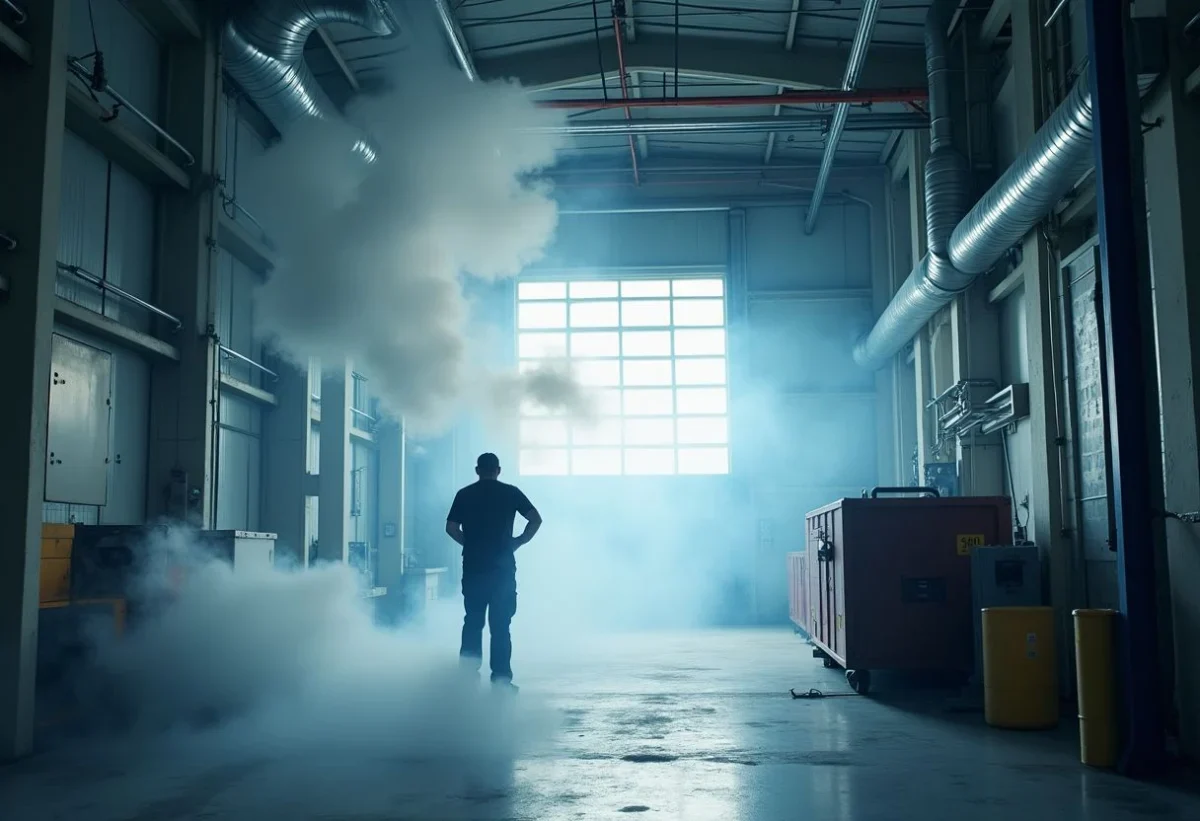
Smoke extraction is an essential component in the fight against fires, ensuring the safety of people and the protection of property within buildings. Whether through natural or mechanical systems, the goal is to effectively evacuate the smoke and hot gases generated during a fire. Various regulations, such as those applied to establishments open to the public (ERP), impose strict standards to ensure optimal fire safety. But what are the different categories of smoke extraction, their operating principles, and the associated regulatory requirements?
Categories of Smoke Extraction
Natural Smoke Extraction
Natural smoke extraction relies on the use of natural smoke and heat evacuation devices (DENFC). It generally involves roof outlets, facade openings, and ventilation ducts. These systems are particularly suited for large buildings and high-rise structures, excluding underground areas.
| Type of Device | Location | Advantages | Limitations |
|---|---|---|---|
| Roof Outlets | Roof | Ease of installation, efficiency | Less suitable for extreme weather conditions |
| Facade Openings | Facade | Architectural integration | Possible visual impact |
| Ventilation Ducts | Interior | Cost-effective | Regular maintenance required |
Mechanical Smoke Extraction
Mechanical smoke extraction uses fans to extract smoke, making the system independent of weather conditions. This type of smoke extraction is ideal for windowless rooms or underground parking, where natural smoke extraction is ineffective.
Regulation and Compliance
Regulations regarding smoke extraction vary according to various criteria, including the type of building and its use. The labor code and technical instructions related to smoke extraction in establishments open to the public impose strict obligations. These standards aim to ensure that smoke extraction systems are not only effective but also compliant with fire safety standards.
Safety Systems for Smoke Evacuation
The implementation of safety systems for the evacuation of smoke and gases is crucial to reduce the risk of fire. Evacuation devices must be accessible and operational at all times to ensure optimal protection.
Smoke Extraction Hatches
Smoke extraction hatches are key elements in smoke management. Available in manual or automatic versions, they require careful installation and regular maintenance to function properly. The maintenance of smoke extraction hatches is essential to ensure their effectiveness in case of an emergency.
The Importance of Smoke Extraction in Building Safety
Smoke extraction plays a vital role in fire safety for buildings. Whether through a natural or mechanical system, adequate installation, compliant with current regulations, is essential to ensure the safety of occupants and the preservation of infrastructure.
Regular maintenance is also crucial to guarantee the proper functioning of smoke extraction systems.
To learn more about the installation of safety devices, discover the advice provided by ventil eco, which offers innovative solutions for buildings.